
Summer 2024
(Click on the images for a larger picture.
If you are viewing Country Eye on a Smartphone or Tablet the page layout
may not be as intended, please see Accessibility
. )
Well, we had to wait a long time before we experienced some proper summer weather following a wet, cold spring and very wet winter.
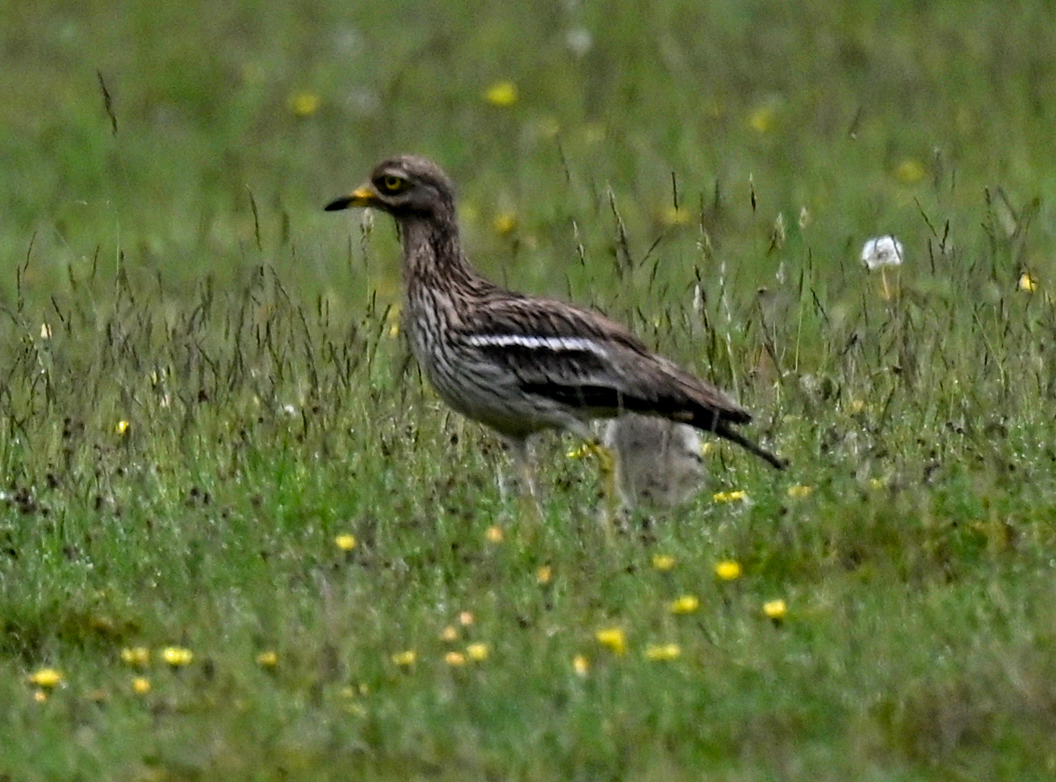 Stone Curlew |
The affects of the inclement weather, attributed to climate change, were not only felt at the time but are having knock on consequences even now; well in to the summer.
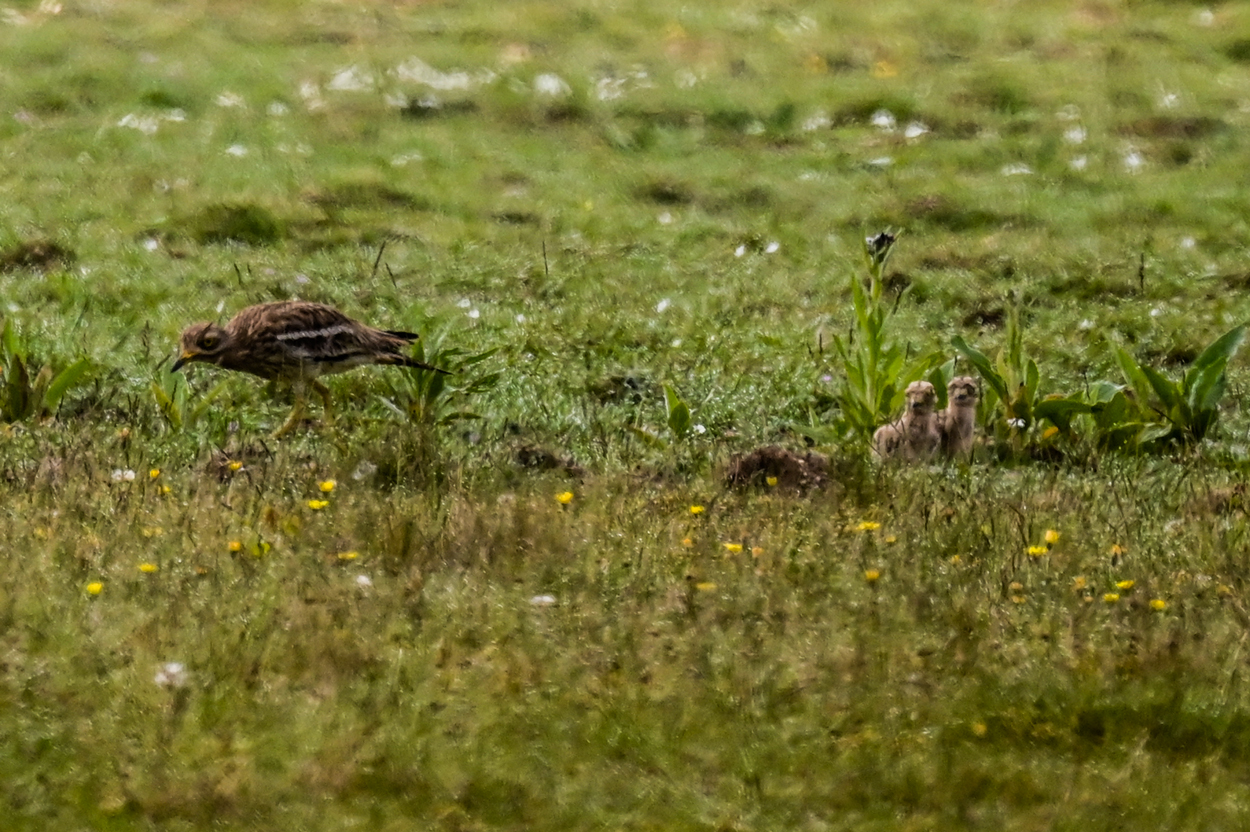 Stone Curlew and chicks |
Stone Curlews, a very rare breeding bird in the UK are amongst the earliest of summer migrants to reach our shores. Despite the wet and cold conditions they returned to their nesting habitat on heathland in the UK at their usual time. My wife and I made the pilgrimage to the Brecks in East Anglia to see these birds and were lucky enough to see both two pairs of adults and their chicks at The Norfolk Wildlife nature reserve on Weeting Heath.
Yellow Wagtails also arrived on time if not a little earlier than usual. This species is normally confined as a nesting bird to southern England but one that I found at the RSPB reserve of Insh Marshes in the Scottish Highlands was a very unusual record. In fact, having entered the record on the BTO's Birdtrack,
 Yellow Wagtail |
I was contacted by The Highland Bird Recorder pointing out how rare they are in Scotland and seeking verification of my submission. Fortunately, I had taken numerous photographs of the Yellow Wagtail on site which I sent to the recorder who duly accepted the record.
Here in Lincolnshire, where they are usually quite common, despite their early arrival, they found that the cold wet weather was not conducive to insect life and as a consequence very few nested and of those that did, many failed to raise their young to fledge.
 Sand Martin |
The cold wet weather and lack of insects clearly had a detrimental affect on all birds that rely on insect prey. Swallows and other hirundines were feeding over coastal marshes such as that managed by the RSPB at Frampton, but this food supply was too far away from the barns and villages where they traditionally nest. This resulted in a further decline of these iconic birds. At Frampton Marsh Sand Martins made good use of an artificial nesting cliff enabling them to raise their young close to a ready supply of food.
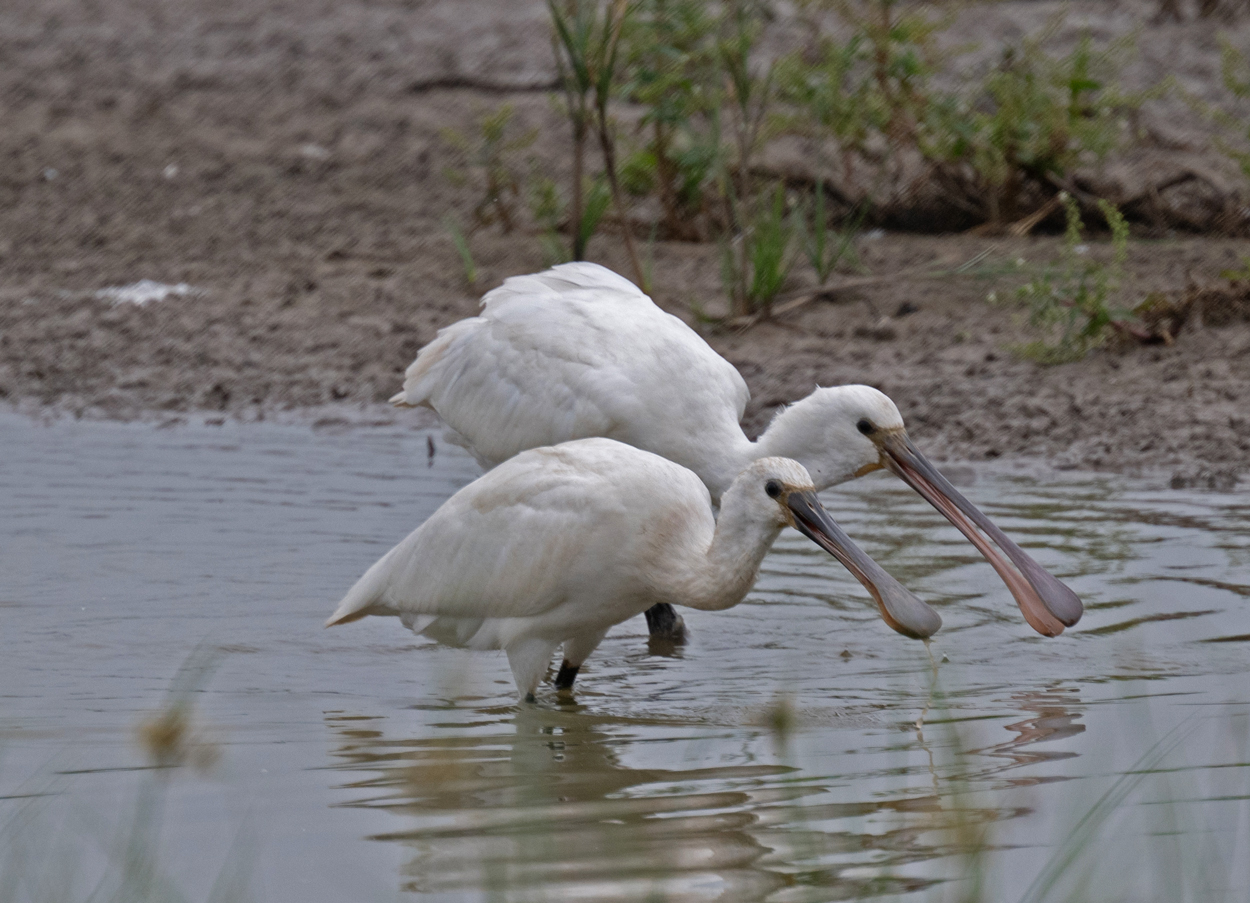 Spoonbills |
Birds that were not dependant on insects for food faired rather better. This was especially true of members of the heron and egret family with record breeding of Spoonbills, Great White, Cattle and Little Egrets, mostly at Holkham National Nature Reserve in Norfolk. Once the nesting season is finished both adults and young disperse and the RSPB's Frampton Marsh in Lincolnshire, where I do some voluntary work, benefited from good numbers of all the aforementioned species.
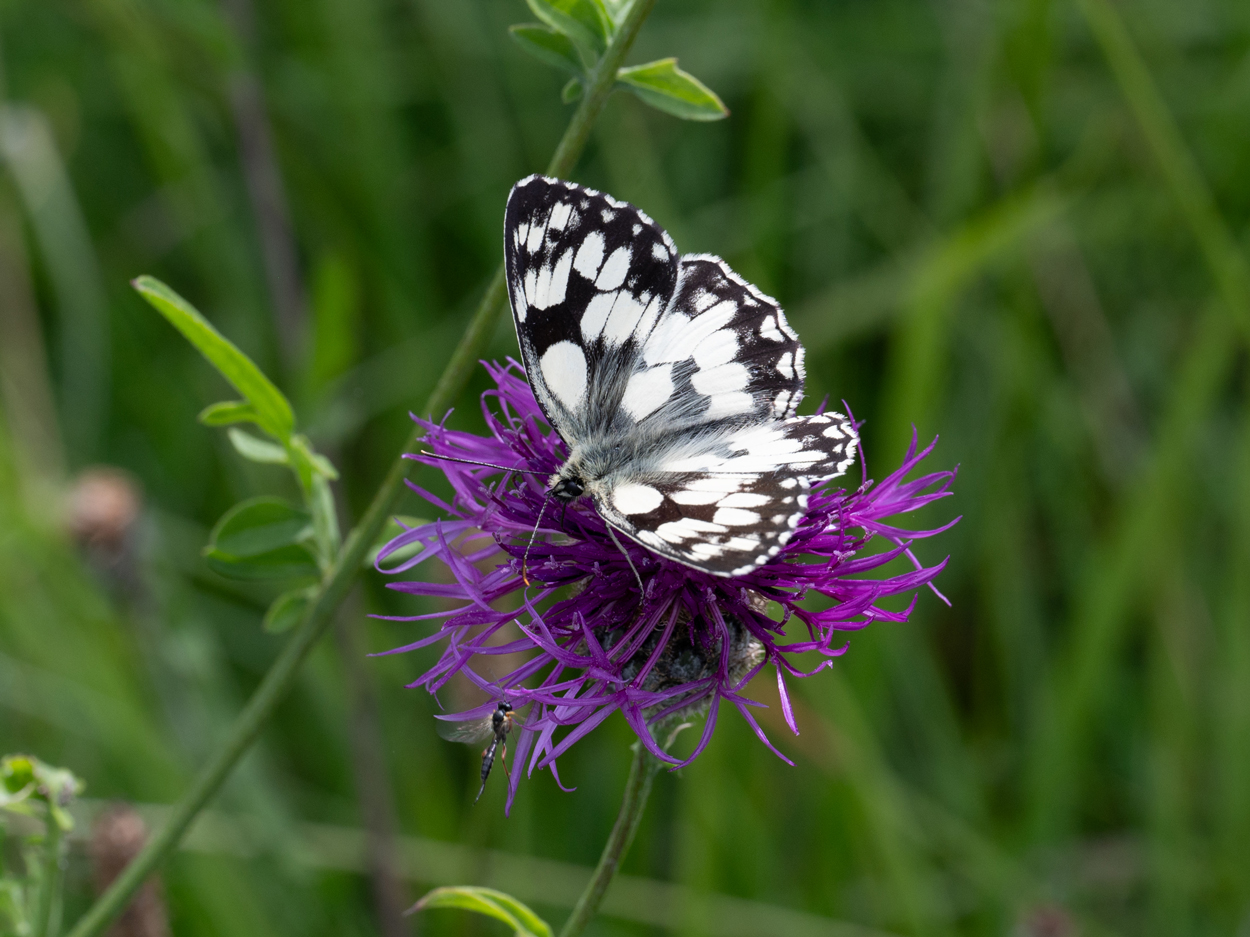 Marbled White |
The spring and summer, so far, has been a disaster for most butterflies, many moths and a host of other important pollinating insects. Some butterflies which had been enjoying a renaissance in Lincolnshire where I live, such as Silver-washed Fritillary and Purple Emperor are very scarce this year. Others such as the Marbled White have faired better perhaps because they favour more open areas that get more sunshine.
I am now hearing reports that wasps, which although most people regard as a nuisance at best, but are in fact, important predators and an important part of our eco system are also much reduced in numbers this summer.
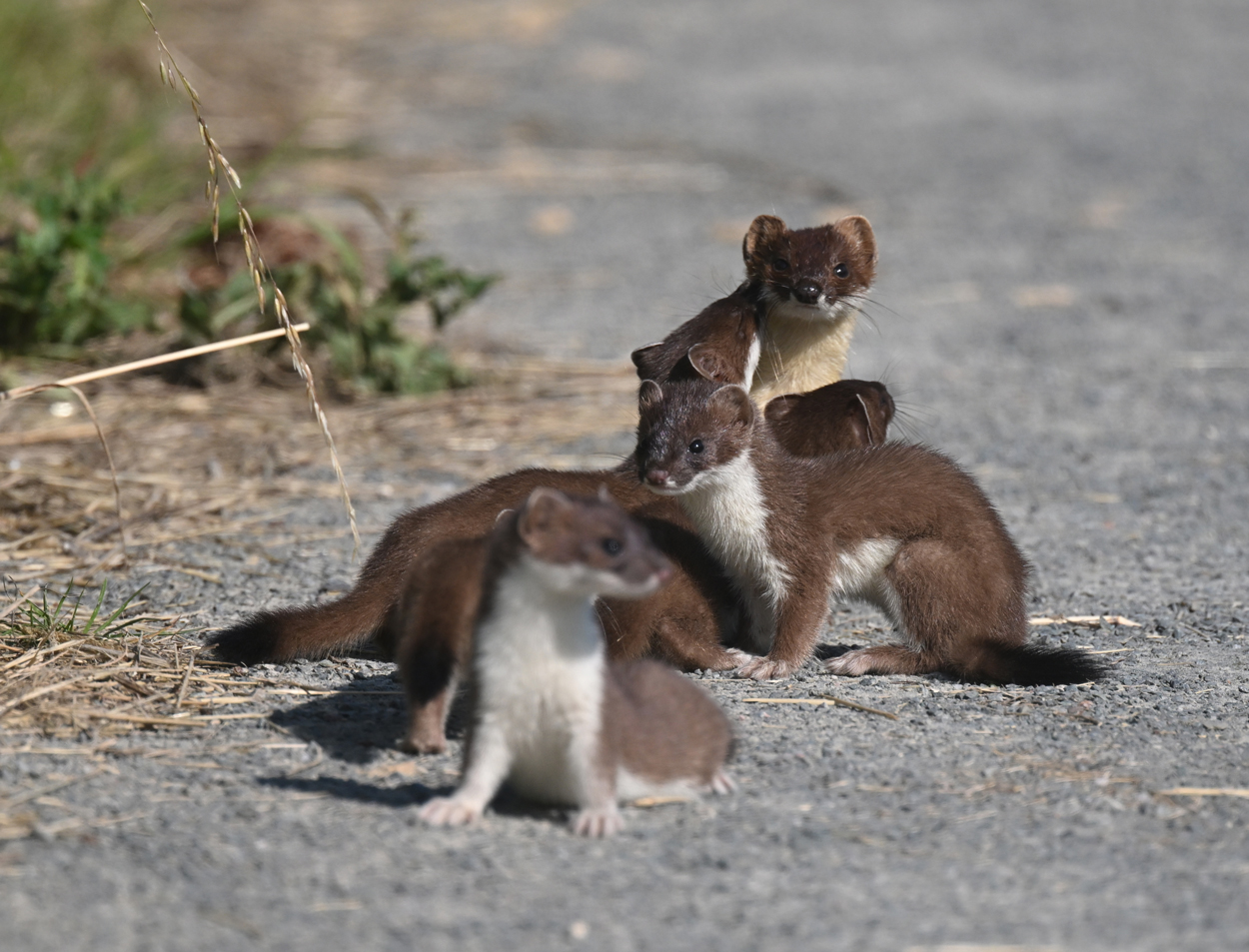 Stoat with kits |
The widespread flooding in winter and spring destroyed crops and prevented others from being sown. The River Welland burst its banks and the flooded farmland became a haven for waders and wildfowl. However, the floods had a detrimental affect on small mammals such as mice and voles which in turn provide food for avian predators such as owls and kestrels as well as some predatory mammals. Locally the average Barn Owl brood is only two young reflecting the lack of prey.
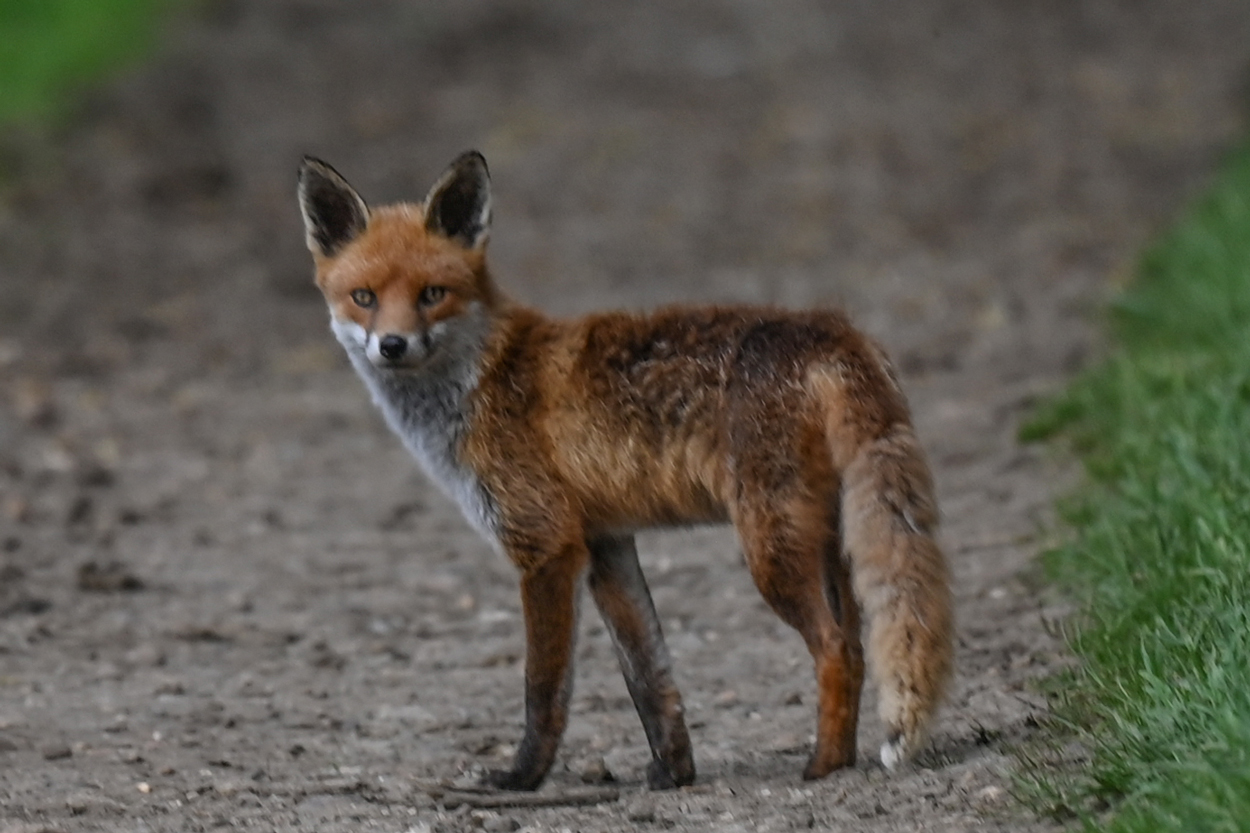 Fox |
Rabbits which have been quite rare for a few years now having succumbed to the cyclical diseases similar to myxomatosis, seem to have recovered a little. This will no doubt benefit predators such as Buzzards and Red Kites as well as some mammals such as Stoats and Foxes.
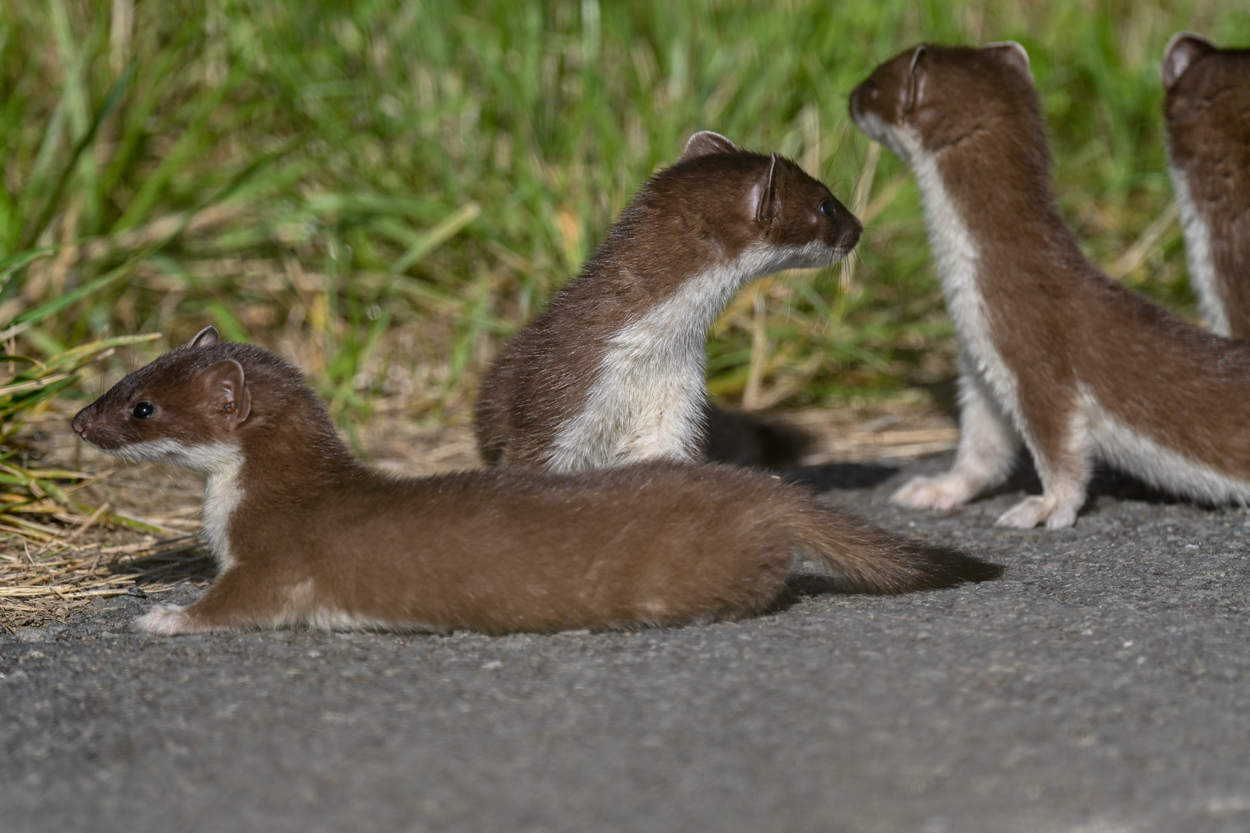 Stoat family |
I was recently treated to an encounter with a whole family of Stoats. The young are particularly endearing in appearance at odds with their reputation as vicious and efficient predators.
Ian Misselbrook
August 2024
Some text may be lost if you are viewing with a low screen resolution - click here for more info