
Late Autumn Diary 2025
(Click on the images for a larger picture.
If you are viewing Country Eye on a Smartphone or Tablet the page layout
may not be as intended, please see Accessibility
. )
This is a short update following the more comprehensive early autumn edition. The open weather continued followed by some unsettled periods in my part of eastern England. Even during the unsettled period, we enjoyed warm sunny days which followed rain at night. Not sufficient to fill the pools and scrapes on many of our local nature reserves but just enough to hugely benefit the newly sown arable, grass and vegetable crops.
 Crossbill |
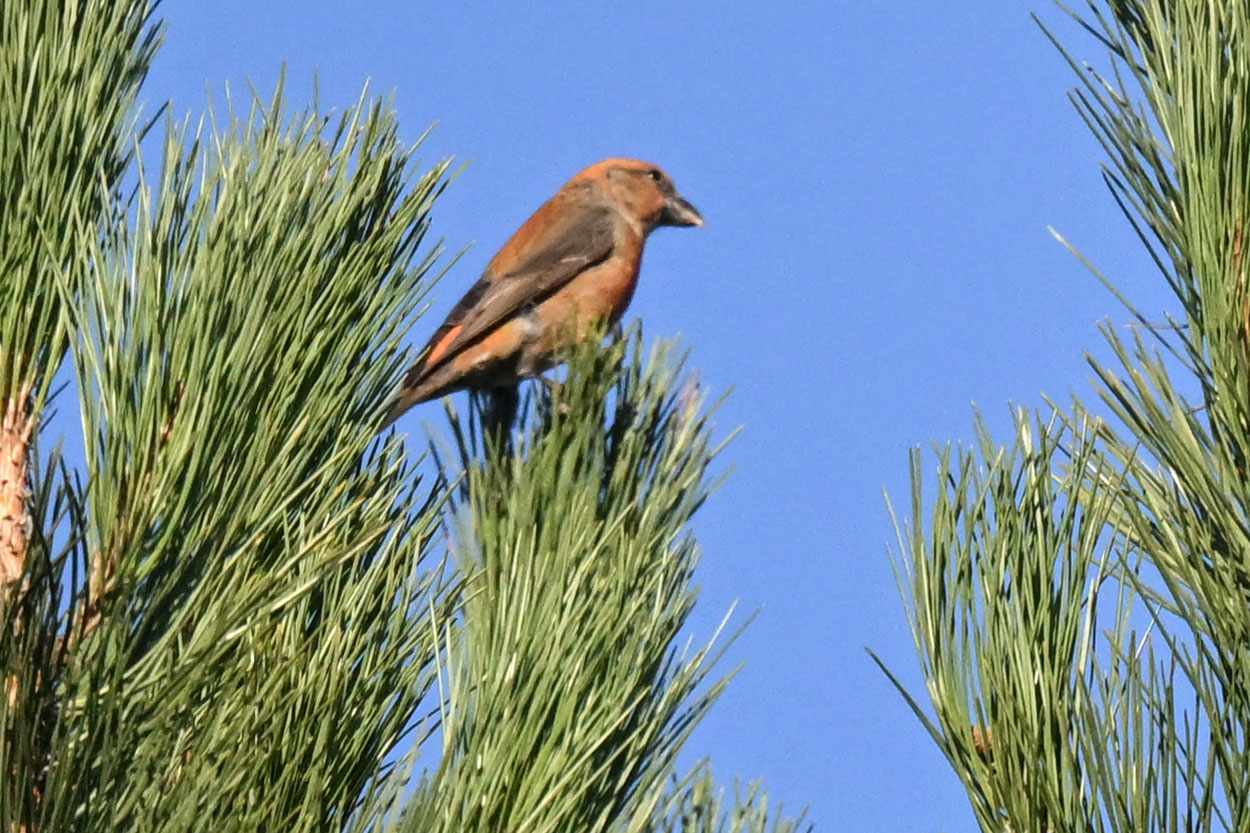
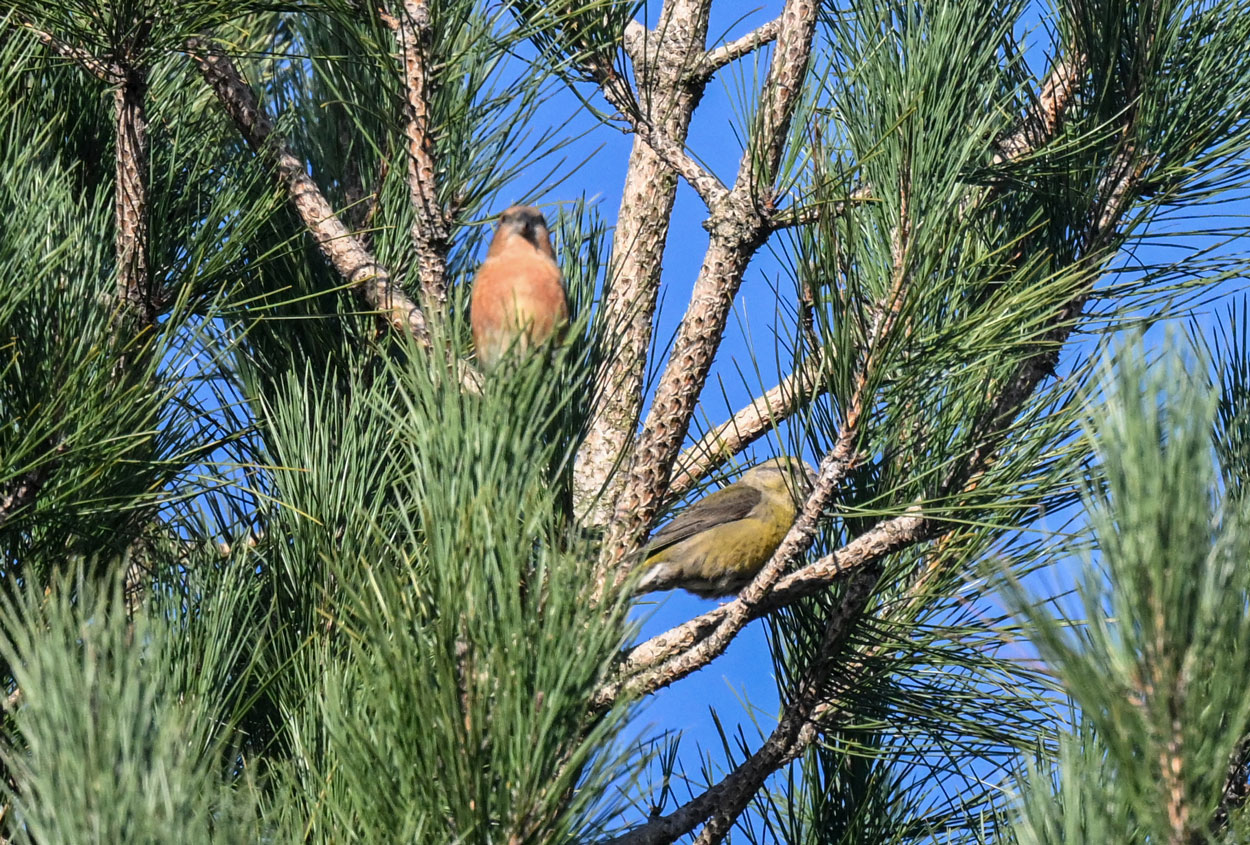
A great year for Crossbills. These colourful finches nest in conifer forests where they employ their crossed beaks to extract the seeds from fir cones - hence the name. Their diet leads to them becoming very thirsty, so when they are not high up in the canopy they come down to drink in puddles and pools.
 Crossbill pair |
 Kingfisher |
 Fallow Deer |
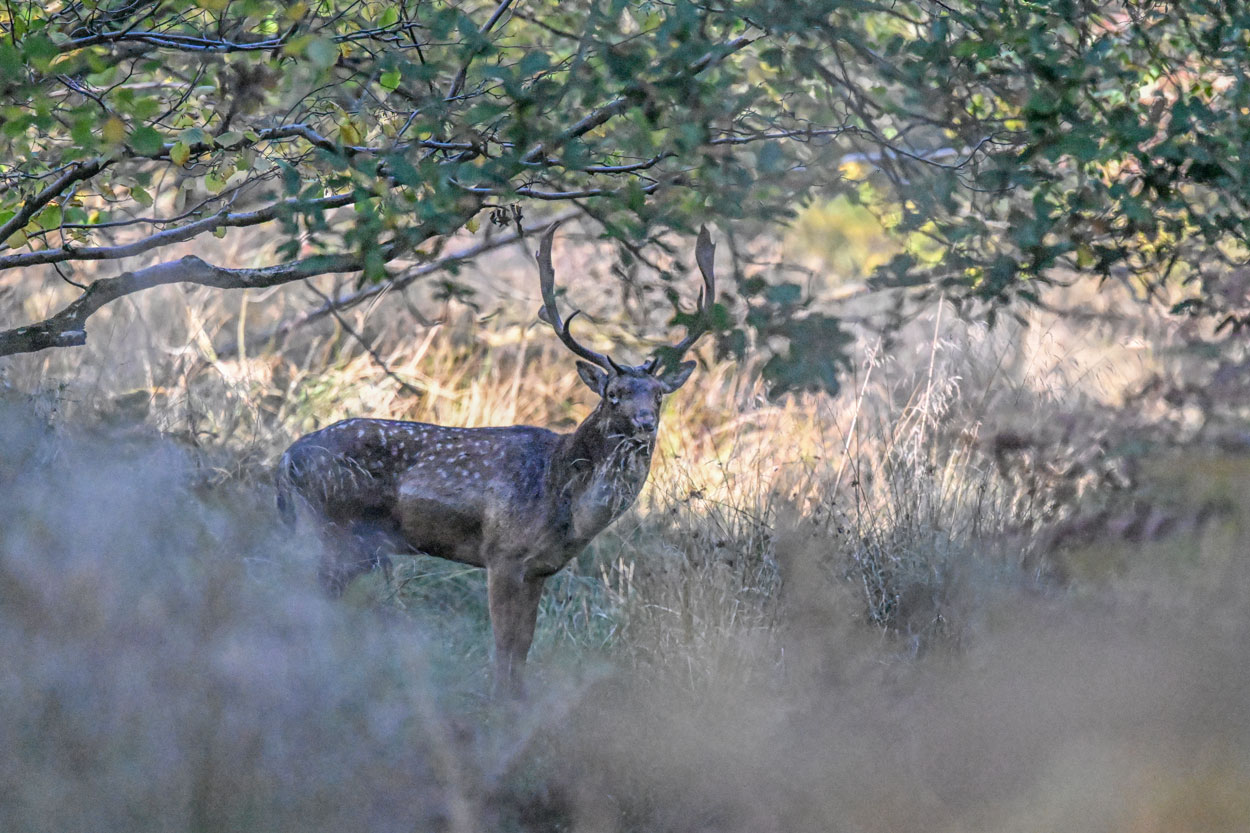
Another visitor to the area around the ponds was a rather magnificent buck Fallow Deer which I stalked in order to get a photo.
Some butterflies and dragonflies persisted to fly well into late October including Red Admirals, Speckled Woods and both Ruddy and Common Darter dragonflies.
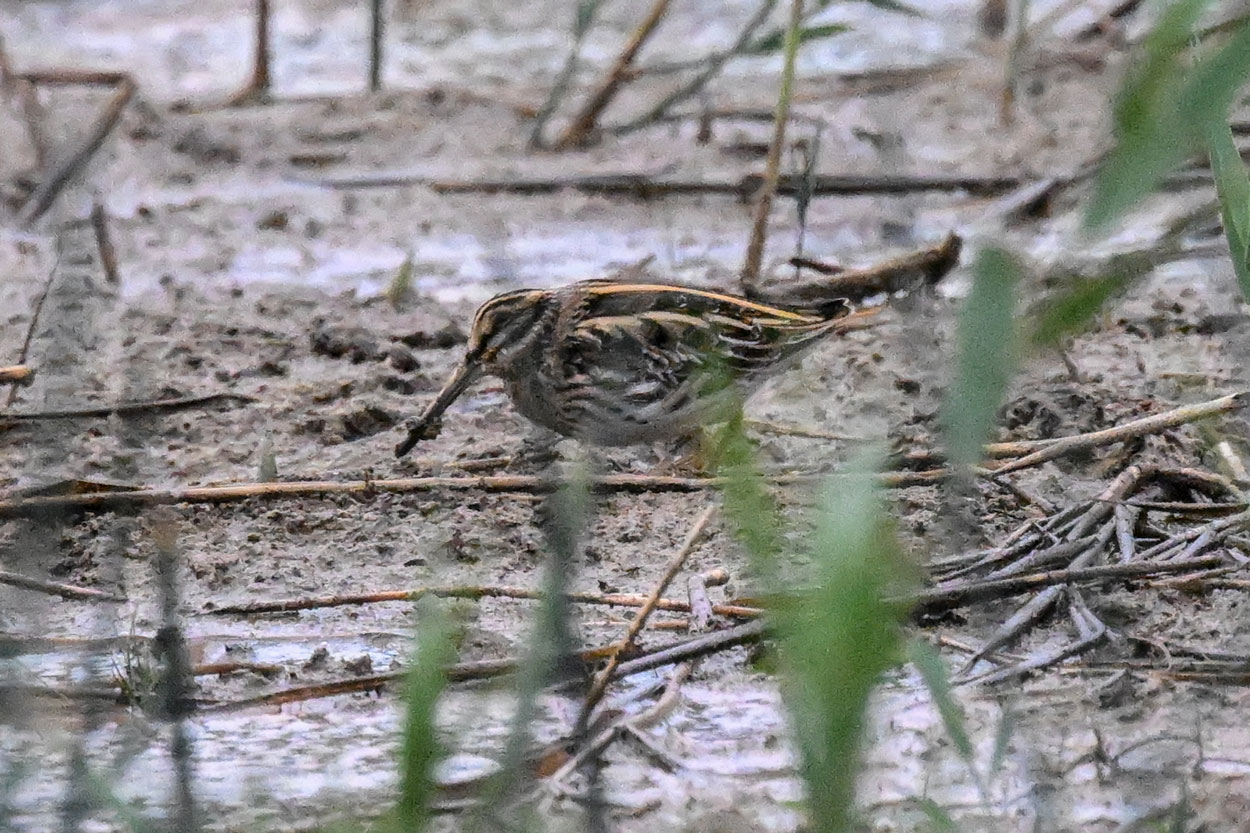 Jack Snipe |
Many of my favourite haunts locally for wading birds were still dry necessitating more road miles than I would normally advocate. The prize wader on one such trip was not one but at least two Jack Snipes. Soon after my car journey I discovered that at least one had turned up locally!
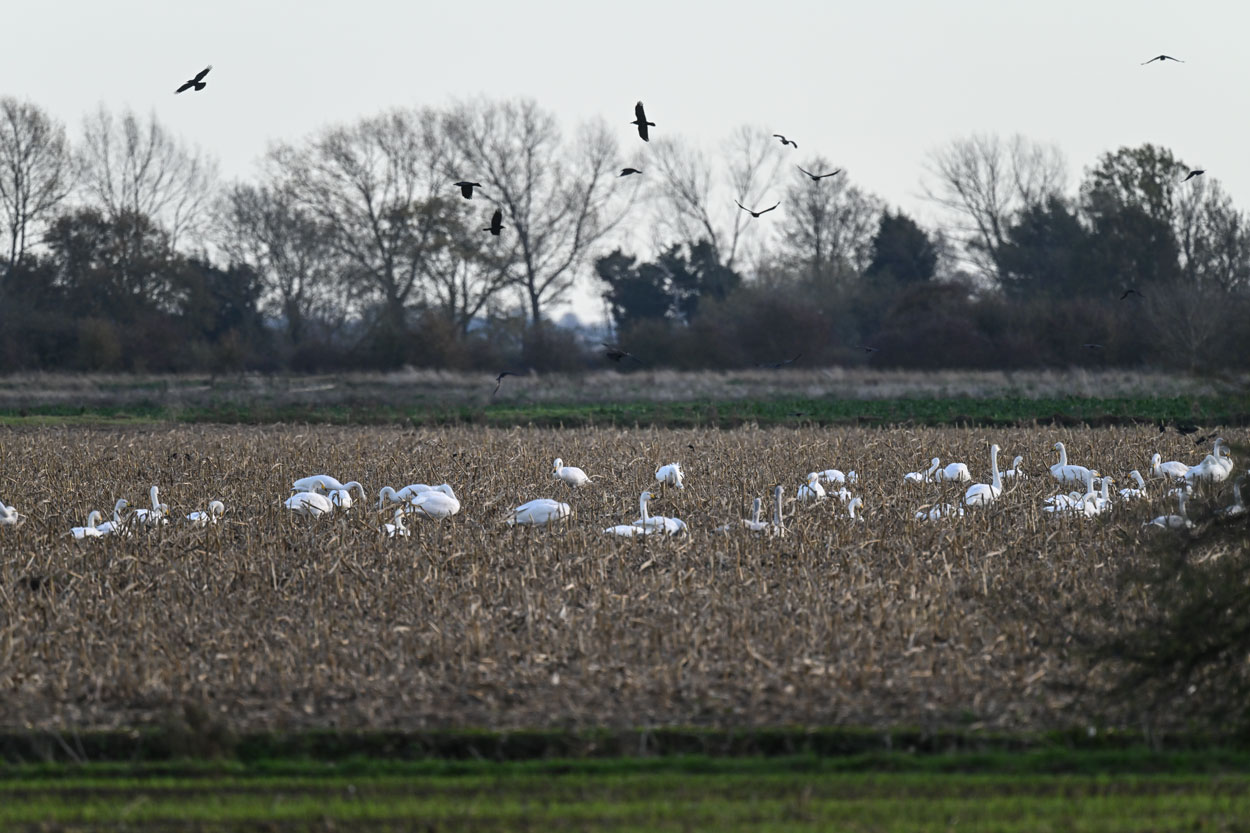 Whooper Swans |
Very local to me; in fact, within half a mile was a flock (herd?) of over 150 Whooper Swans. These vocal birds nest mainly in northern Europe, Russia and the arctic circle and migrate south to avoid the ice and hard winters. Given the large number of young that I saw feeding in a field of maize stubble I assume that they had a successful breeding season.
Ian Misselbrook
November 2025
Some text may be lost if you are viewing with a low screen resolution - click here for more info