
Summer 2026
(Click on the images for a larger picture.
If you are viewing Country Eye on a Smartphone or Tablet the page layout
may not be as intended, please see Accessibility
. )
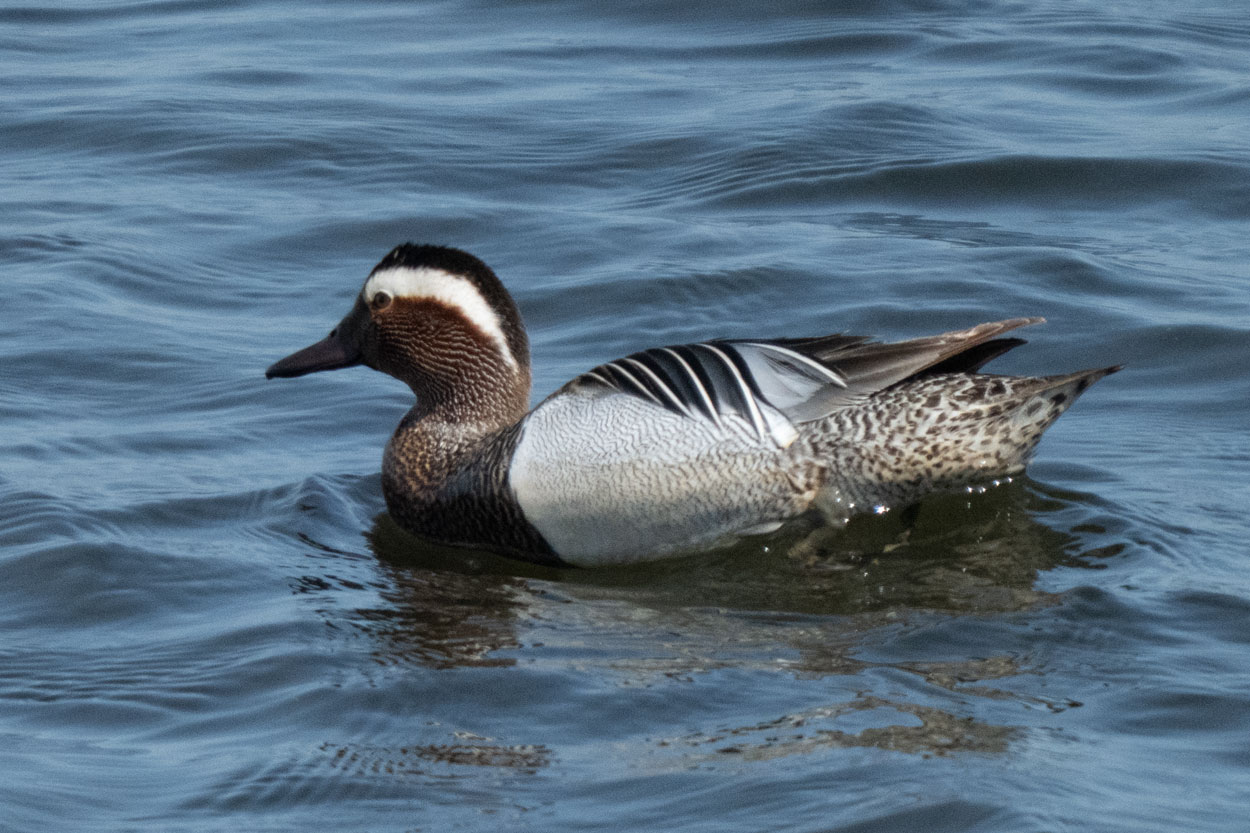 Garganey Drake |
The first heatwave of the summer in south-east England including Lincolnshire, where we live, commenced in May. Temperatures exceeded 30 degrees Celsius giving us no time to acclimatise having been heating our homes just a week before! As I write in mid-August we are enduring the 5th heatwave of the summer and most of the country is in official drought.
Most of the summer migrant birds arrived on time during the spring, the exception being Garganey a beautiful duck that unlike most of it's relatives which are either resident breeders, such as Mallard or mainly winter visitors such as Wigeon and Teal, is a summer visitor. Normally Garganey arrive as early as March, but I did not see any until a few arrived at the RSPB's Frampton Marsh nature reserve well into May.
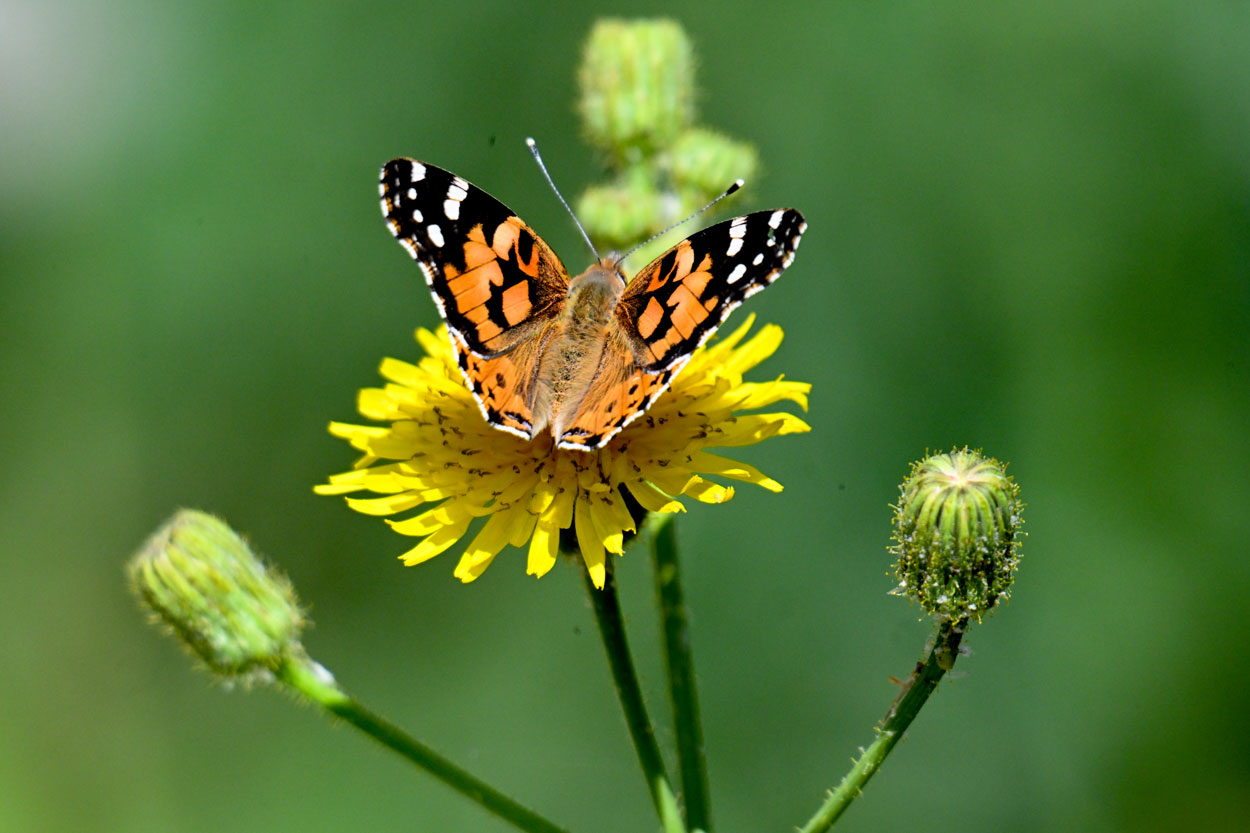 Painted Lady |
Some butterflies arrived with the high pressure heatwave in May; notably Peacock and Painted Lady butterflies. The latter species may have flown all the way up from the Mediterranean or even as far as North Africa.
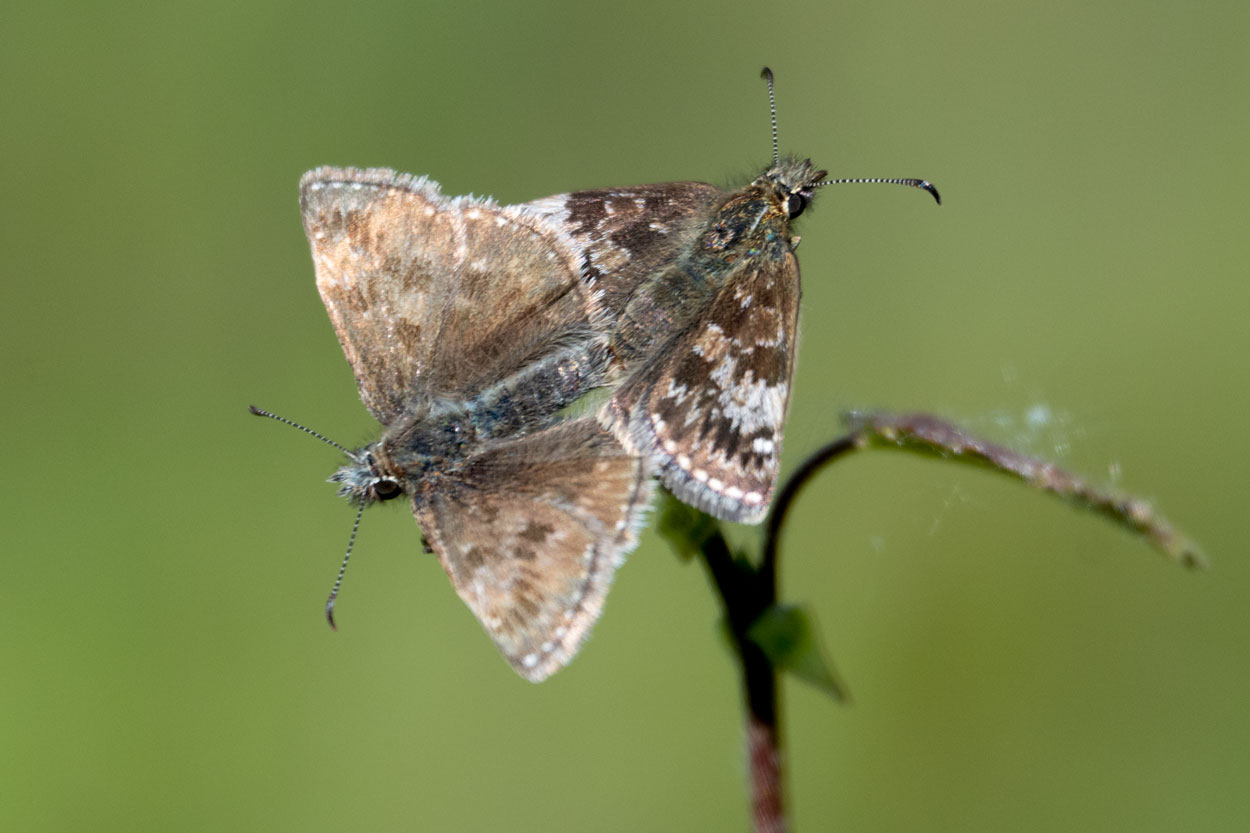 Dingy Skippers mating |
A local wood includes an open area managed for butterflies by Butterfly Conservation which I visited on the 24th of May. The highlights of my visit were Dingy Skippers mating and at least ten of their more attractive cousins; Grizzled Skippers. Other butterflies there included a few Small Heath and over 30 Common Blues.
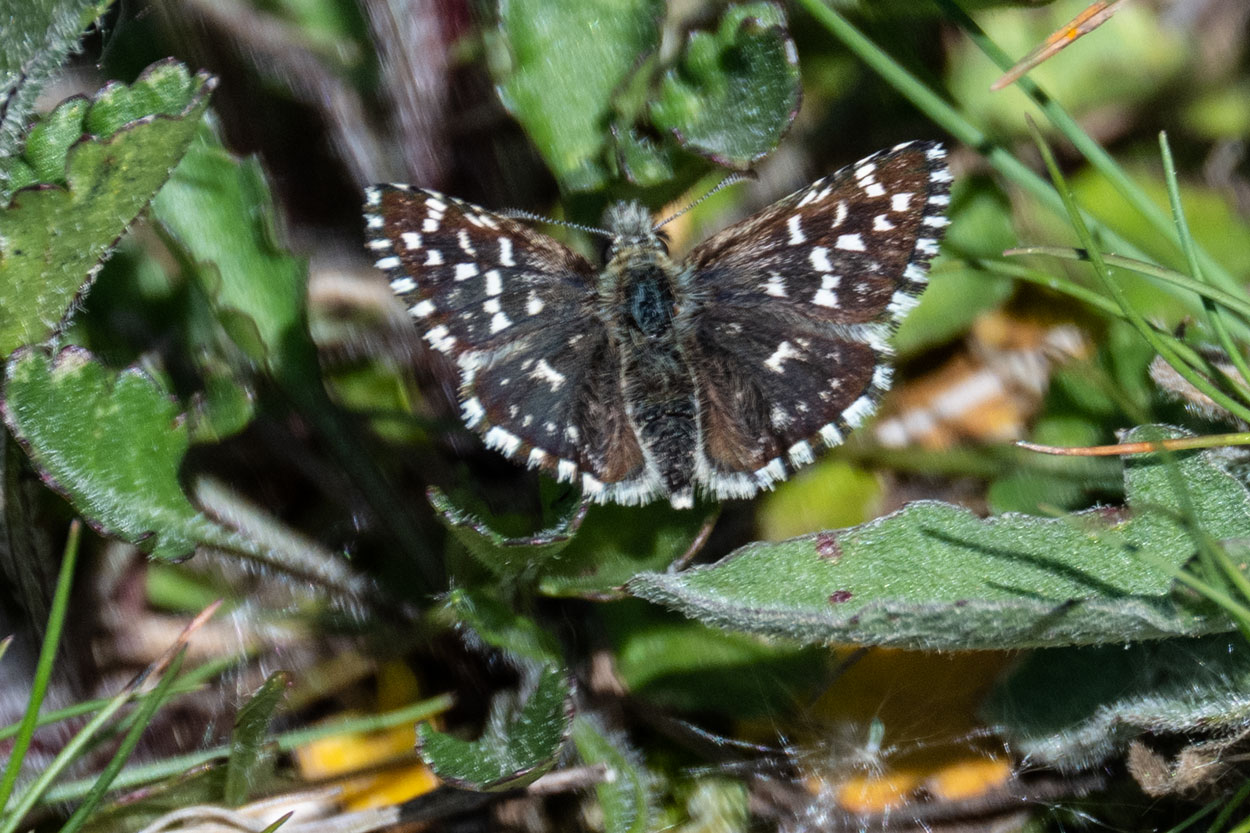 Grizzled Skipper |
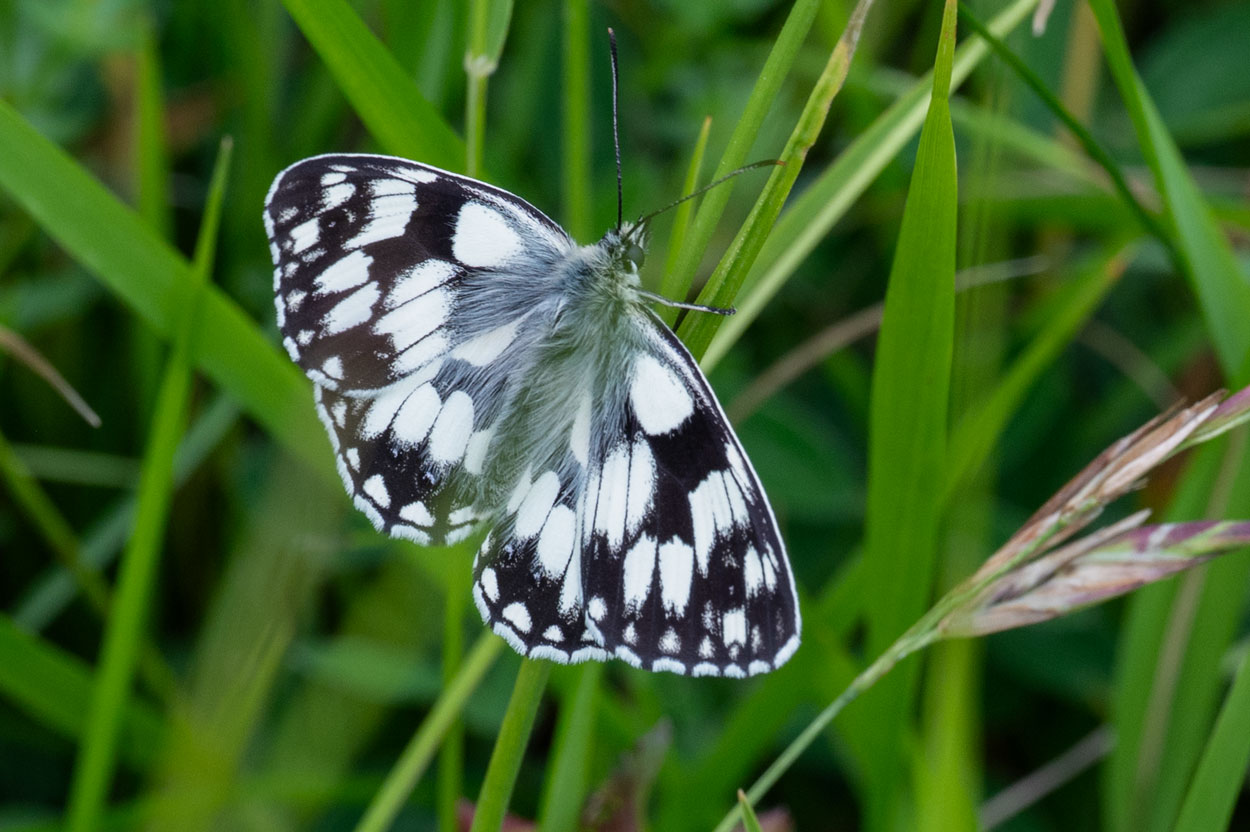 Marbled White |
One butterfly that has extended its range northwards is the Marbled White; actually a member of the brown butterfly genus. A local site of extensive grassland that has not been farmed for at least 40 years held a colony of over 100 in July. Unfortunately, the butterfly season finished early as the drought increased, scorching grass and causing many nectar bearing flowers to meet an early end.
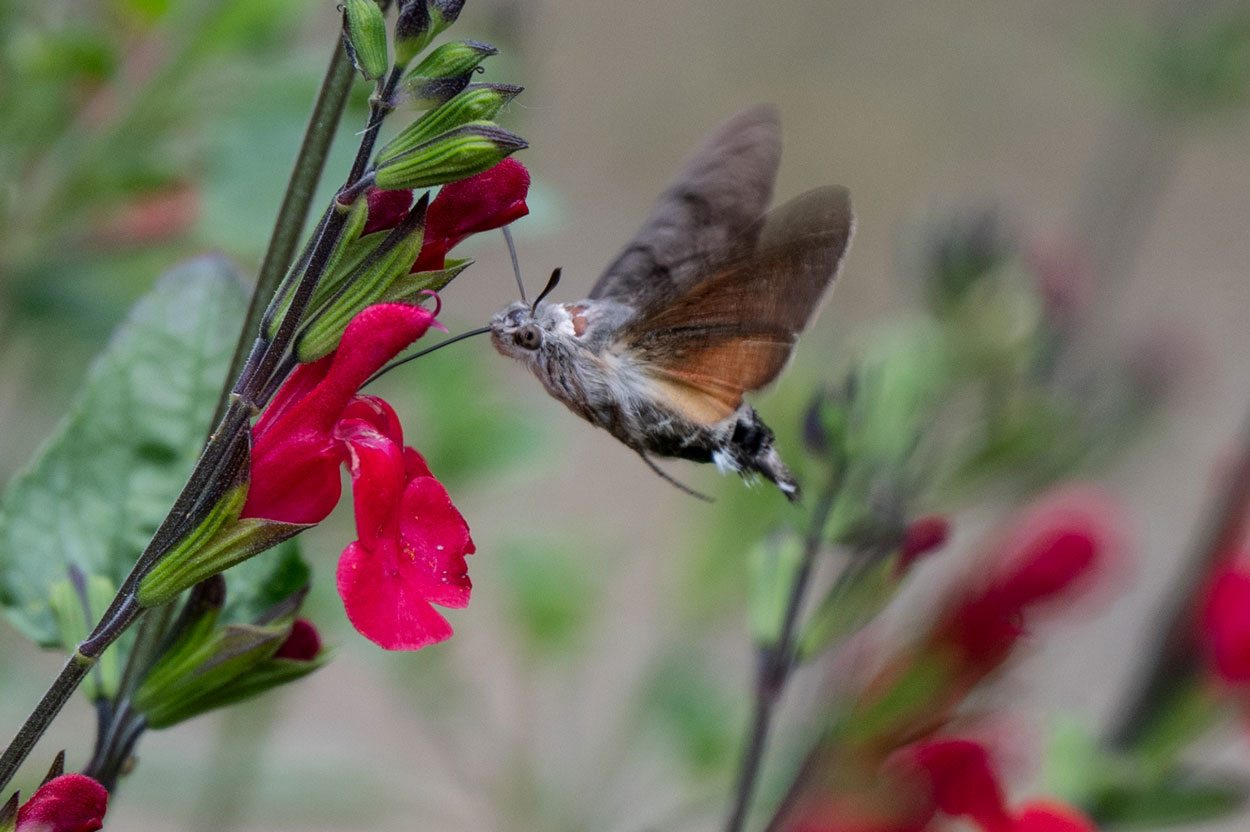 Hummingbird Hawkmoth on Salvia |
It has also been an exceptionally good year for Hummingbird Hawkmoths. In our garden they seem to favour Salvia flowers and buddleia. Their wings beat incredibly fast enabling them to insert their long proboscis deep into flowers to suck up the nectar.
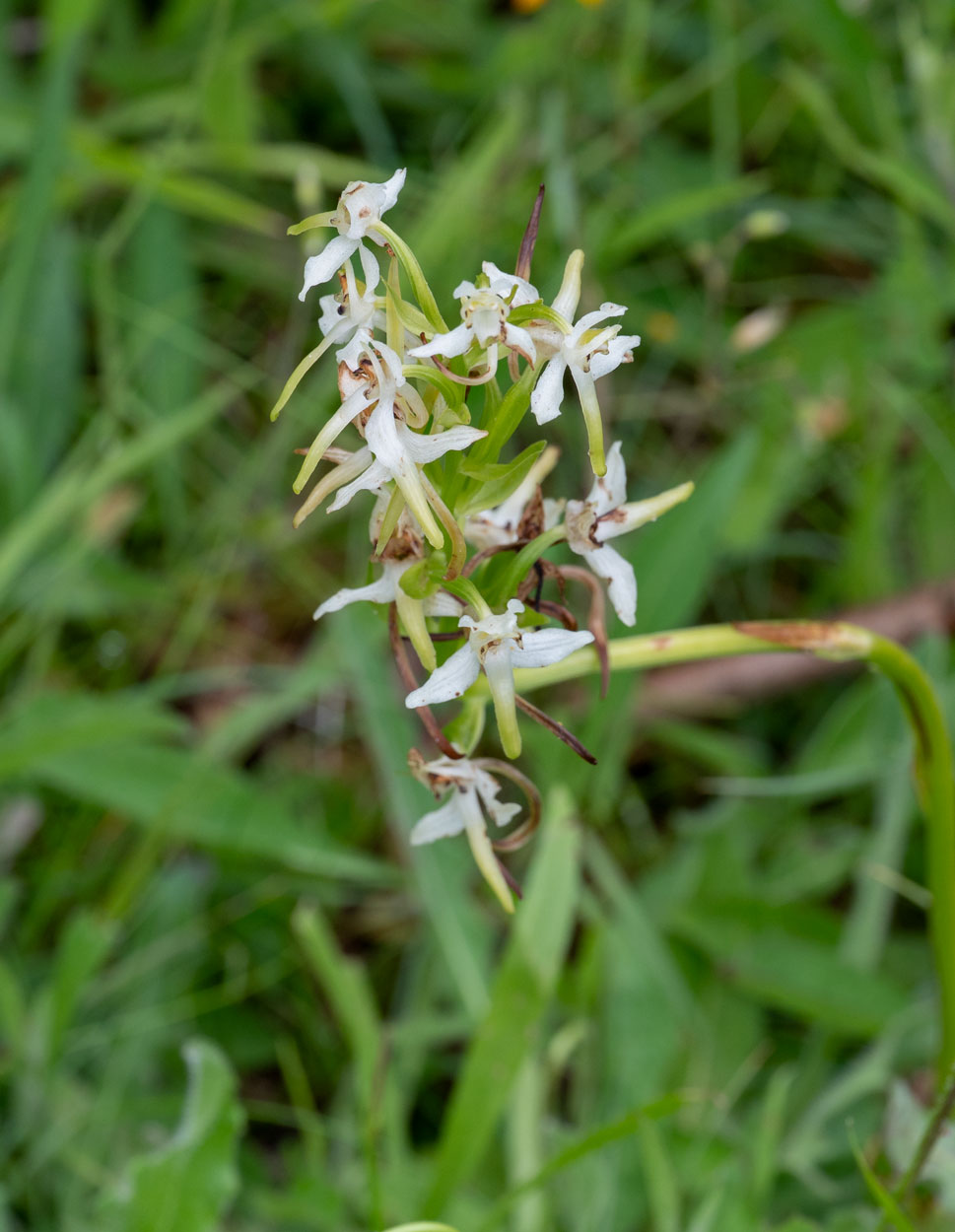 Greater Butterfly Orchid |
A count of orchids at a reserve of the Lincolnshire Wildlife Trust produced high numbers of both Pyramid and Common Spotted Orchids along with a few Bee Orchids and a single Greater Butterfly Orchid in mid-June. An unexpected bonus of a flock of Crossbills flying over the meadow almost made me lose count of the orchids!
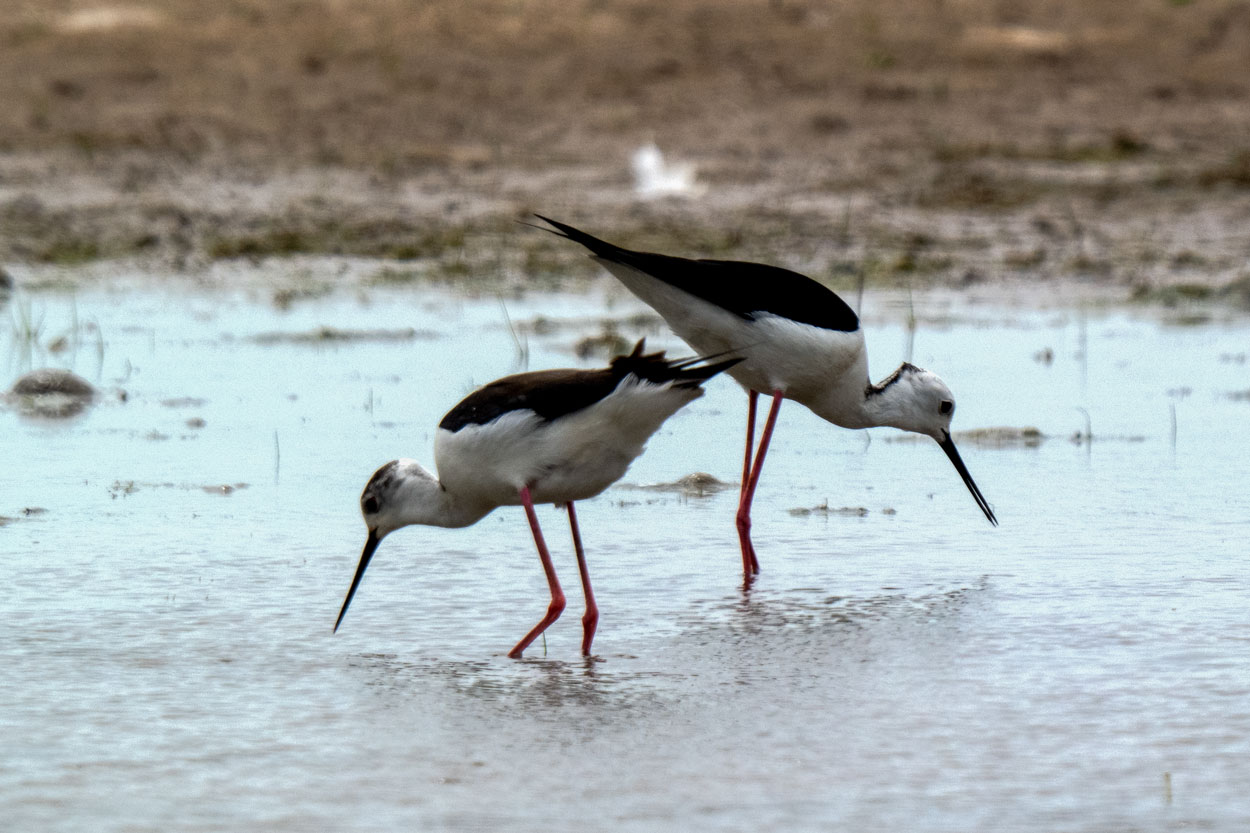 Black-winged Stilts |
Generally speaking, the birds in my area seem to have had a good breeding season. The cranes at Willow Tree Fen reared both of their young to fledge and fly around the local area with their parents. A pair of Black-winged Stilts, a species more usually found around the Mediterranean attempted to nest at Frampton Marsh but inexplicably failed. Most of the warblers reared young but as all the berries appeared very early in response to the drought there is concern that few berries will remain to feed the warblers and other passerine migrants sufficiently to make the journey south to sub-Saharan Africa.
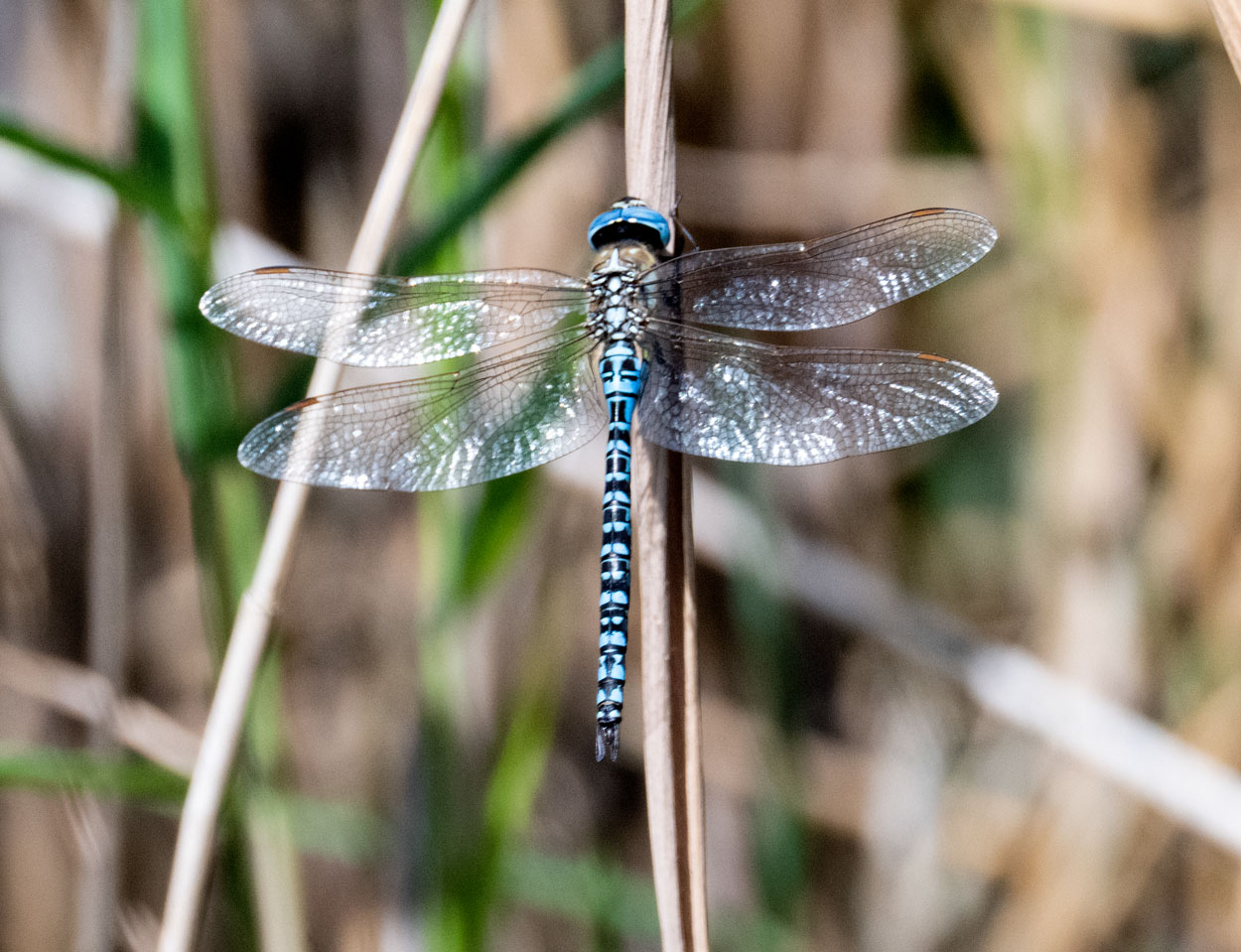 Southern Migrant Hawker |
As well as the aforementioned butterflies several dragonflies usually found in southern Europe arrived in the UK. I was delighted when some friends of mine found a beautiful Southern Migrant Hawker at Frampton Marsh which I was able to photograph.
The impact of the ongoing drought on our environment and wildlife is devastating. The National Trust's Dunwich Heath was totally destroyed by fire and the neighbouring reserve of RSPB Minsmere was also set ablaze. Lowland heath is very rare in England and the unique ecosystem includes such rarities as Dartford Warbler, Woodlark, Nightjars and many rare butterflies and moths. The heat and wildfires were not just confined to England and Wales, as a large area of ancient Caledonian pine forest burnt down in Abernethy in the Scottish Highlands.
If this is really the new normal and man-made climate change continues, then we are set to lose so much of our natural assets.
Ian Misselbrook
August 2026
Some text may be lost if you are viewing with a low screen resolution - click here for more info